


Condominium water treatment:Many advantages but also Many Costs
(Reading time: 4 minutes)
 The best known plant to solve the problem is the softener (called, wrongly called, purifier).
We know the advantages of a softener, but the disadvantages? .
-
- Salt consumption
- Water consumption (distributed in all bills)
- Cost Maintenance of a specialized company
- Potability hazard (Battery)
- The administrator is responsible for the installation if any problems occur.
For more information, see our website.Kalko Tronic and Softener FAQ sectionclick here
Kalko Tronic has solutions for both the condominium and the gymnasiums (users with high consumption) without these problems.
 A Kalko Tronic plant has purchasing costs lower or equivalent to a softening system, however the maintenance costs of the system are also8-10 times lowerFor the building or the gymnasium,already during the first year.
In fact, the softener has a maintenance cost (salt, water, work)often similar to that of purchase.
Kalko Tronic, already the first year, has no additional costs.
Building with single boilers, gymnasium with rapid boilers, individual homes:
Often only one Kalko Tronic system is sufficient after the autoclave.
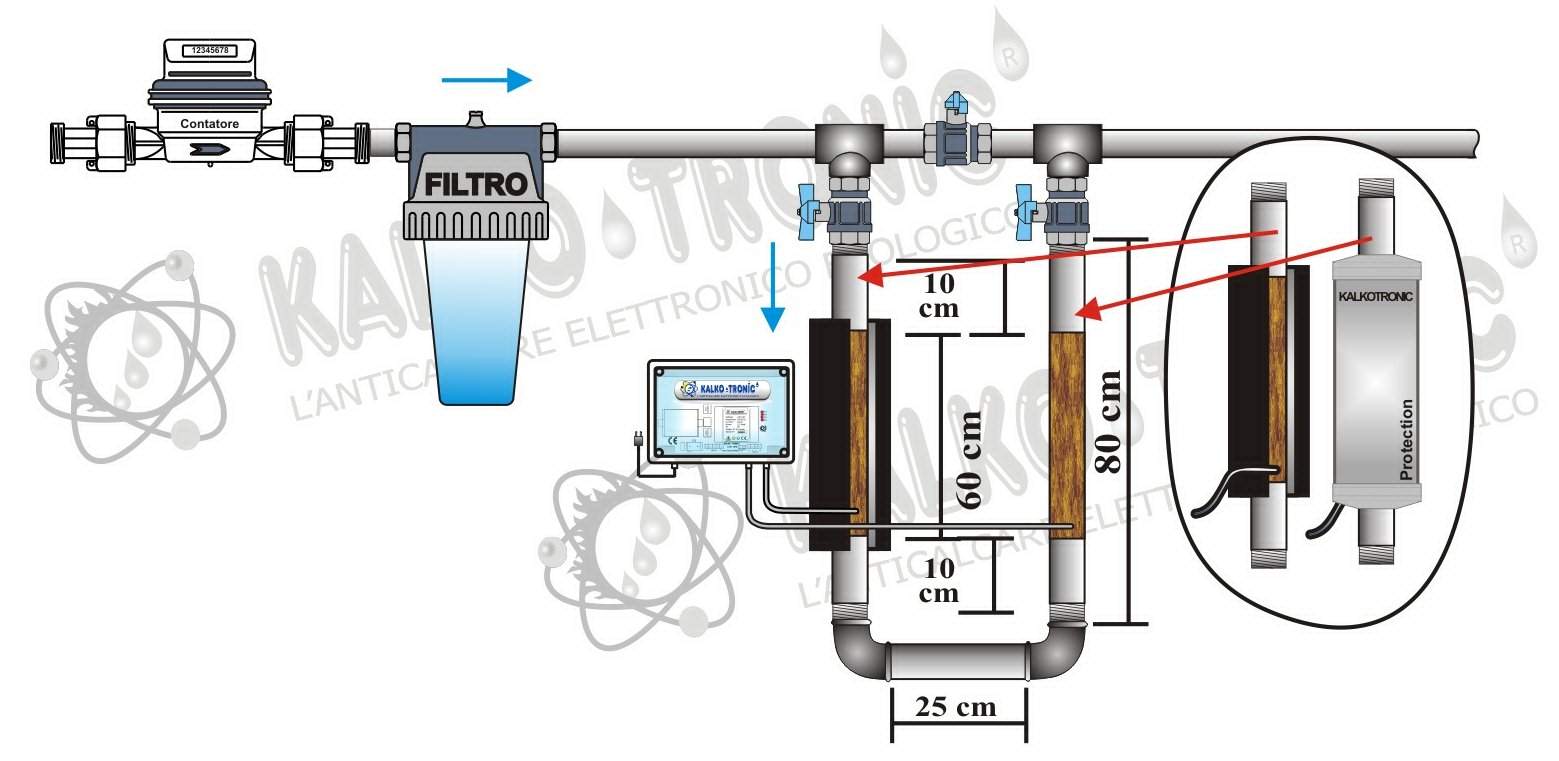
The plant is sized according to the number of apartments.
Condominium with central sanitary hot water system.
Kalko Tronic saves on ordinary maintenance costs, limits the wandering currents already present on the plant, and corrosion.
Remember that a softener often increases the corrosion problem, especially if the hardness is not kept under control and is kept under the imposed and statutory parameters (dpr 31/2001).
Kalko Tronic proposes two systems:
1st system called "Master Slave" for existing plants with thermal power station.
2nd system called "Distributed", often more advantageous, for small plants.
MASTER-SLAVE SYSTEM KALKO TRONIC
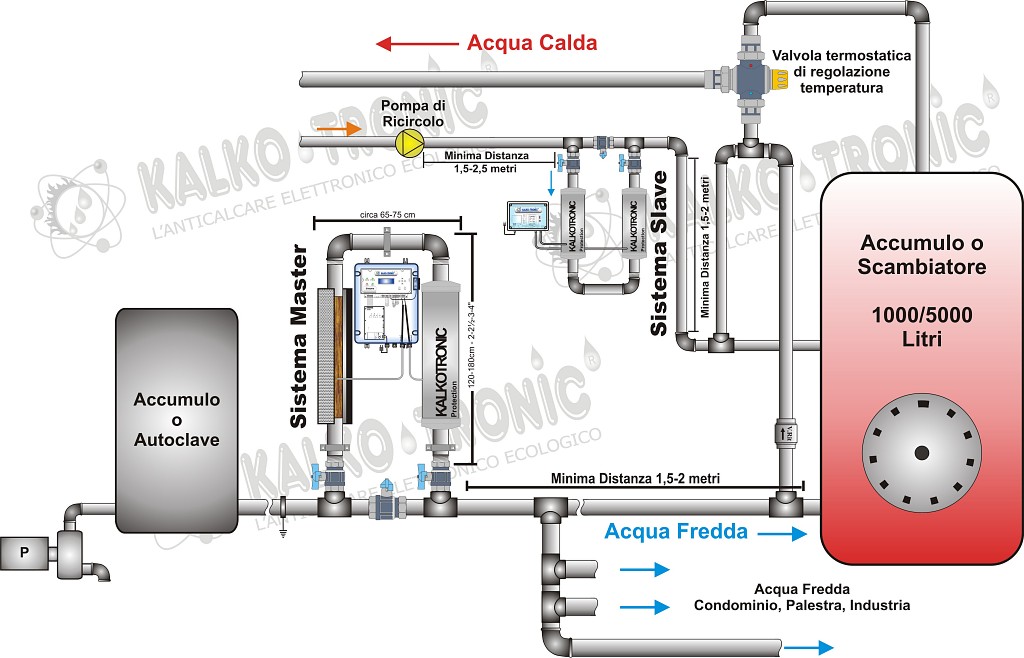
The main system (master) treats the arrival water from the meter or autoclave.
The second plant is "maintenance", called "slave": being a physical and non-chemical treatment, the anticalcar effect, continuously circulating, is dispersing.
By inserting a second small device on the recirculating circuit (often aKT Micro) is emphasized the system obtaining important results.
The position is before the mixing valve protecting this from limestone.
Recommended a Y filter before or after the recirculating pump (possibly before the Kalko Tronic system) with manual or automatic purging for the elimination of larger wastes detached from the circuit during the first phase of cleaning of the same.
KALKO TRONIC DISTRIBUTED SYSTEM
This system is used for plants of any size where cold water and hot water start from the same plant.
It is used much on small gyms or particularly large plants.
Splitting consumption between hot water and cold water reduces the flow rates on the single line allowing optimal water treatment.
Large plants
In the past, condominium systems of 200-250 apartments have been performed using this technique using a Kalko Tronic for each cold line after the distribution collector instead of a single treatment on a single dorsal (high or very high peak flow rate) and some devices specially positioned for the management of the ACS thermal power plant alone.
The distribution of the flow rates on the various lines has allowed the achievement of important results, especially on old and encrusted plants, allowing protection and recovery of the pipes themselves evident.
With Kalko Tronic, the construction of an additional technical space has sometimes been avoided, which is customary for softening systems.
A softener would also involve the continuous supply oftonnes of saltand huge waste of water with its high management costs.
Small plants
Thanks to the Kalko Tronic distributed system you can have a compact system and a very low annual review cost.
Example and comparison of Kalko Tronic plant to softener:
- 5-6 apartments with softener, maximum maintenance costs:€ 800 – 1000 a year.
- Kalko Tronic plant distributed or with thermal power station:250 to 350 euro per year.
Reference scheme:
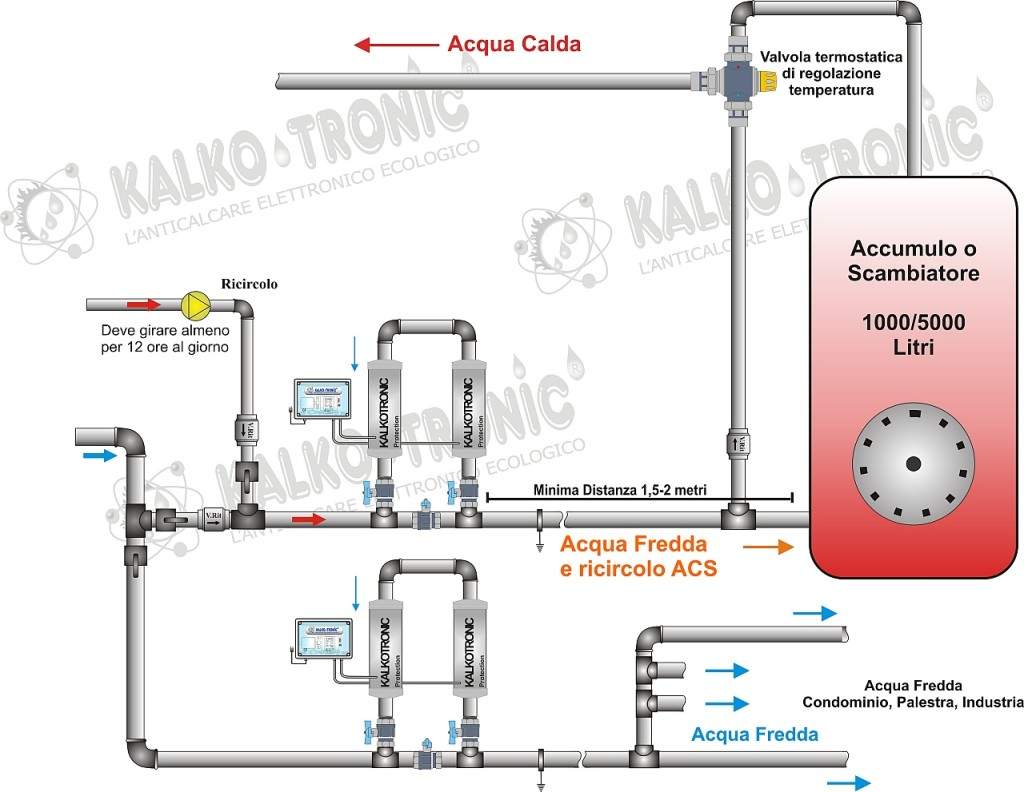
In this case the device at the top in the diagram (on the hot water line) treats cold water during ACS consumption but also covers maintenance during water recirculation.
The device at the bottom (cold water only) will work for utilities that power household appliances such as washing machines, dishwashers and the cold line in general.
The cost of assistance and the purchase of a Distributed system is lower than the Master-Slave system, however this solution is not always feasible and the logistics of the system to be treated from time to time must be evaluated.
Kalko Tronic always seeks the solution best suited to the needs of its customer by optimizing the yields to the maximum and creating the "discrusting" effect on the coils of the boiler/accumulation bringing a considerable saving in energy bill.


